MAGNUNA means madwoman in Arabic (2020–present)
Research, lexicon, and performance project
MAGNUNA is a long-term multidisciplinary project dedicated to the ambiguous narratives of female madness in Arabo-Islamic literature from the Middle Ages. It offers a feminist inquiry into the metaphysics of madness and sanctity in medieval Arabo-Islamic thought, drawing from psychiatric, poetic, and theological sources to trace how the madwoman emerged as a vessel of divine intelligence.
By filtering this understanding through narratives of female madness–where hallucination and prophecy entwine–MAGNUNA channels madness as a site of revelation: an embodied threshold where language collapses and transmission begins.
There is a long literary tradition in Islam that connects madness with poetry and mysticism, the notion that the mad are otherworldly, touched by truth. Magnuna is the colloquial Egyptian form of the Arabic word Majnuna, a term that shares the same root as jinn (demon) and derives from the verb ja-na-na, meaning “to disappear.” Junun, or madness, is the disappearance of the mind.
In these narratives, madness is distilled into stillness, absence, and withdrawal. Vacant stares, errant speech, and the looming possibility of malefic vision. It becomes an apparition: a sublime, disorienting encounter with the real.
MAGNUNA moves toward a new synthesis of madness. It departs from the tropes of agitation, to activate their latent choreography. It treats madness as a lived script, one that can be restaged, reinhabited, and rewritten through the body in movement, in time, and in first person.
MAGNUNA unfolds across three stages: a research inquiry, a lexicon-glossary, and a series of performances.
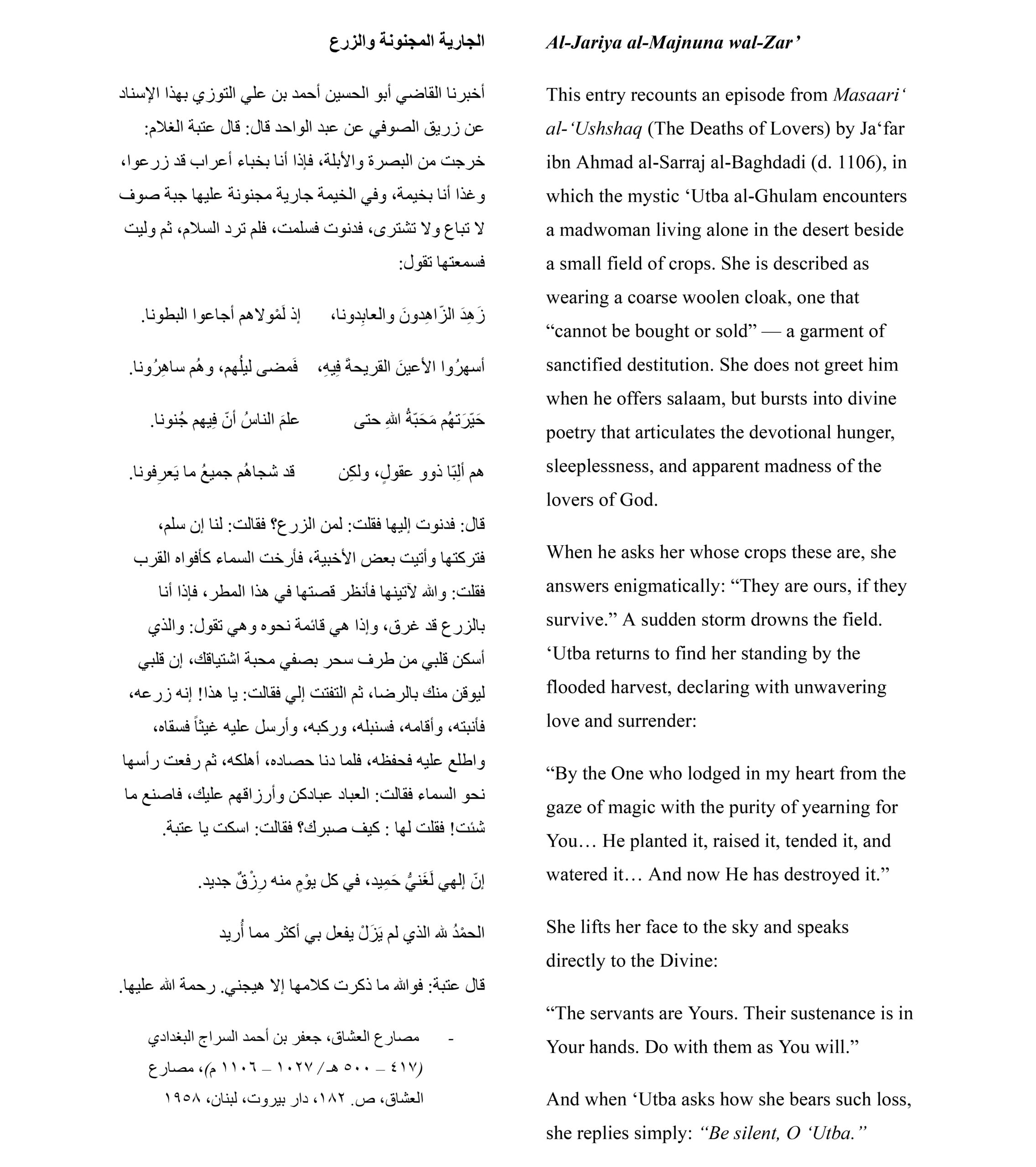
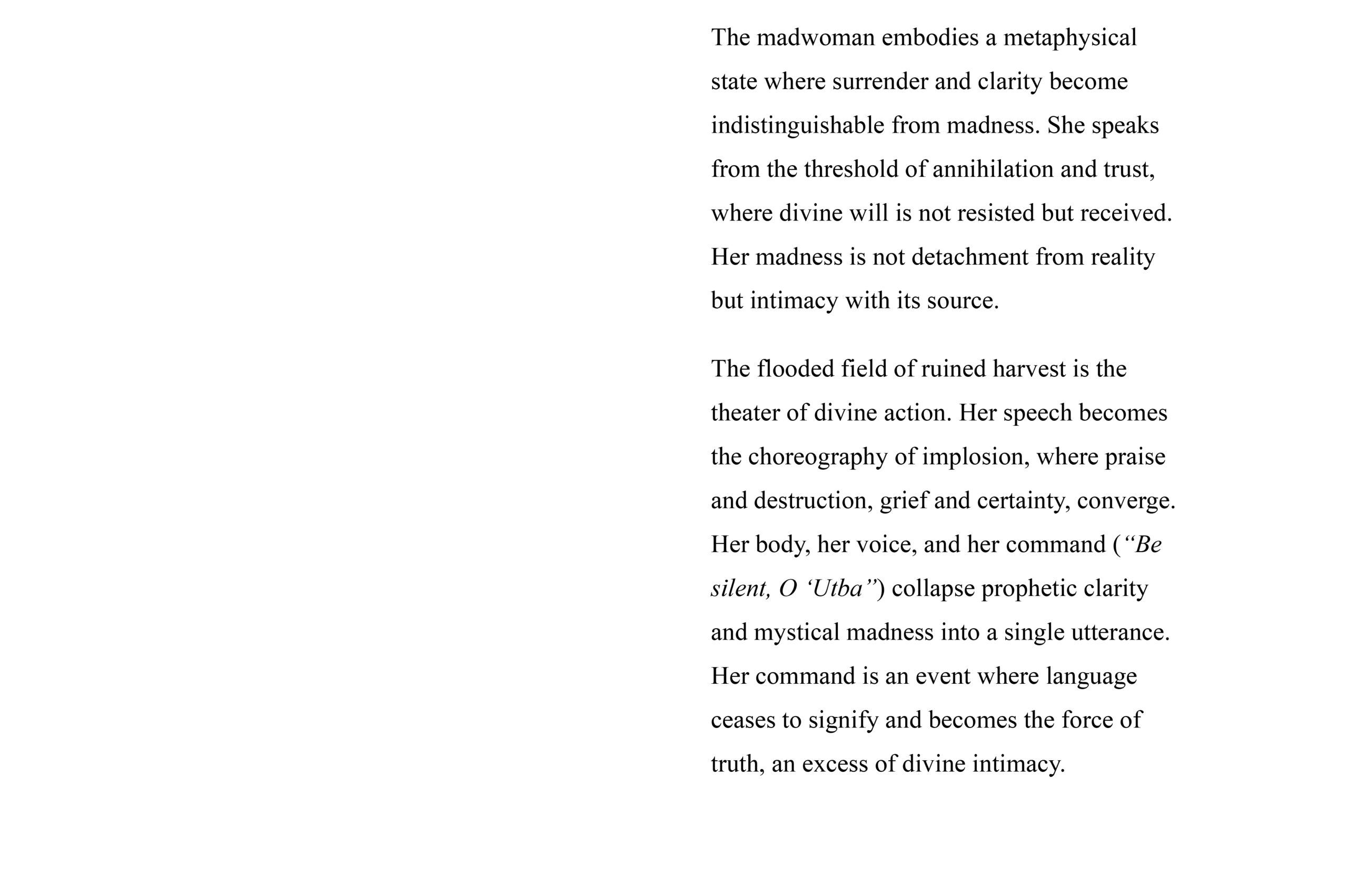
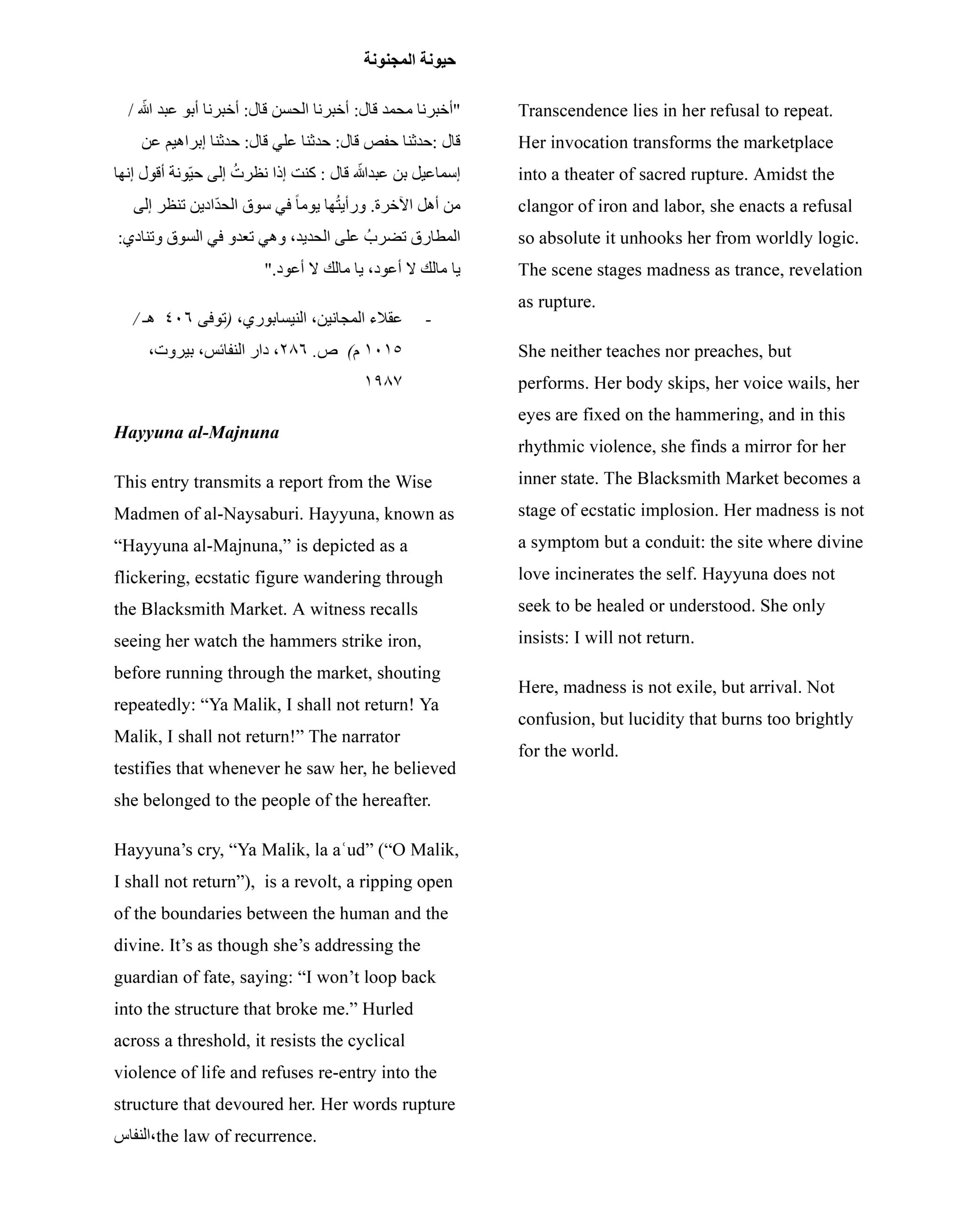
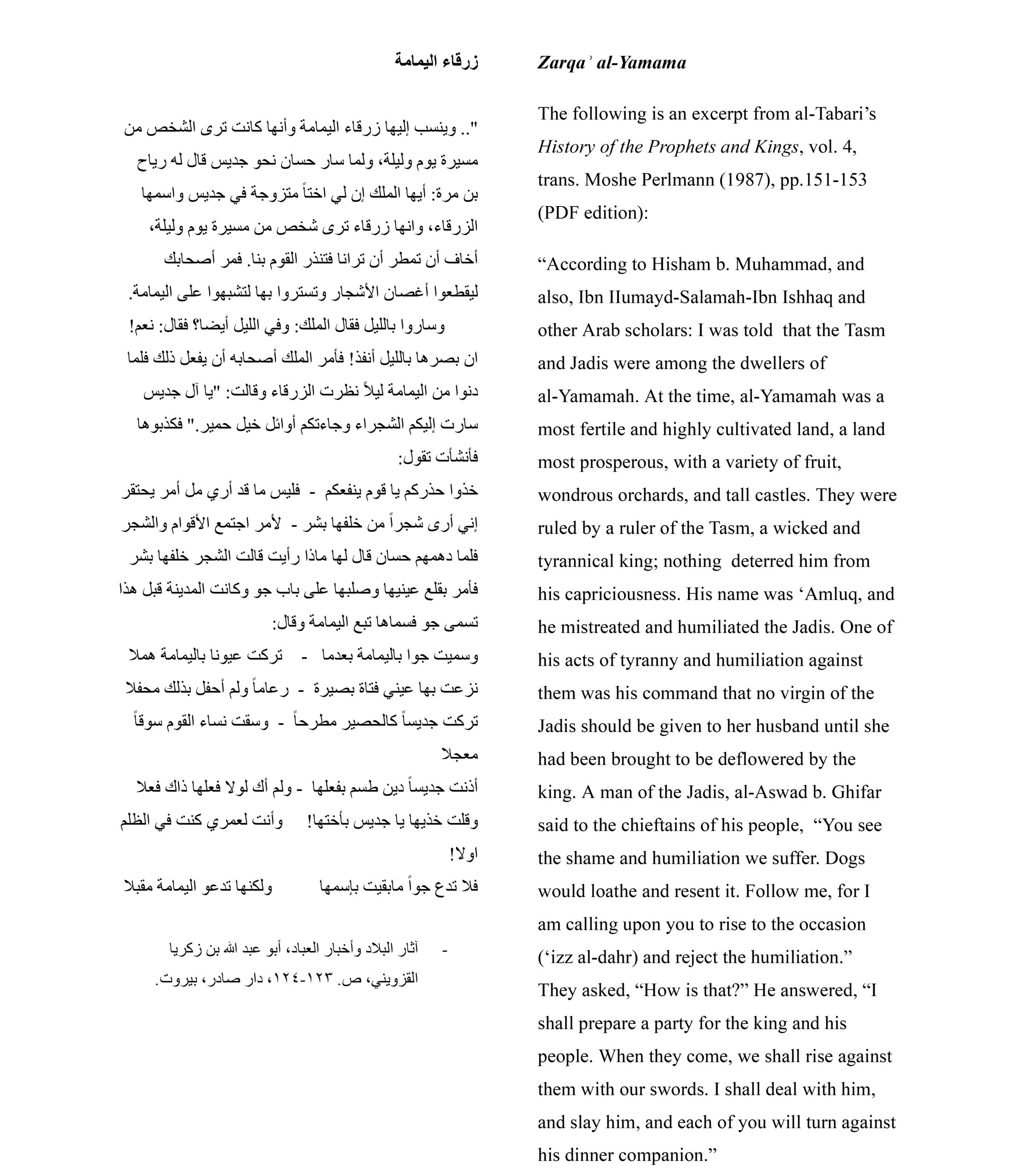
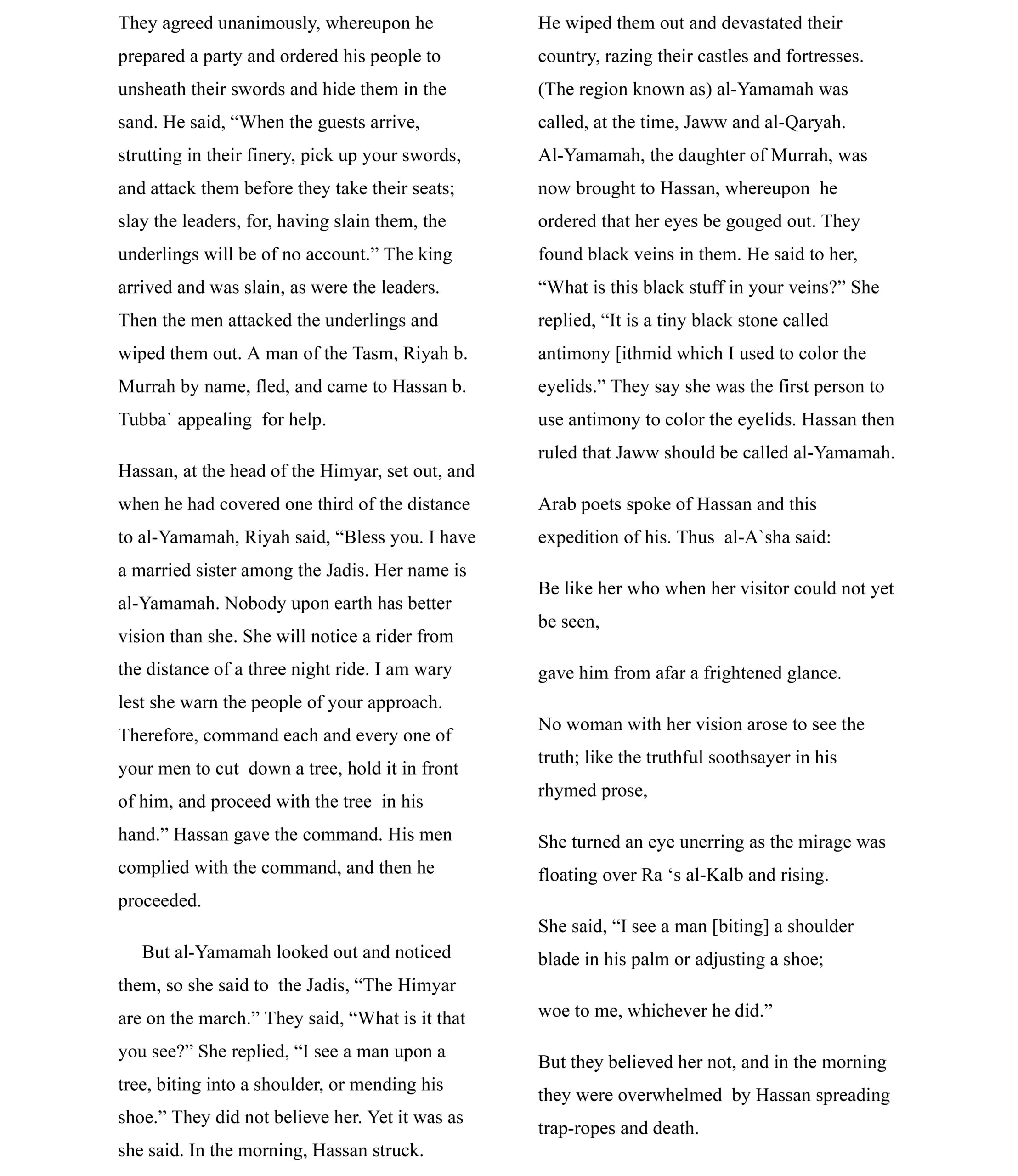
The Lexicon of MAGNUNA is a living digital hybrid archive: part glossary, part constellation—an open-ended transmission structured as a cosmogrammatic atlas. It gathers and classifies every recorded description, utterance, and vision of female madness in literary and historical sources.
The glossary component anchors the physical, classifying not only signs of madness but the symbolic languages through which holiness, estrangement, and resistance are encoded. Each entry is a residue of presence. The commentary and annotations reveal how madness was imagined, feared, venerated, and what these traces disclose about the bodies who bore them. The lexicon opens each entry to interpretation: to dream, to myth, to ritual. Together, they form a living archive of sacred derangement—an evolving site of inquiry and choreography, a cartography of divine interruption.
MAGNUNA is a choreography of implosion; an inquiry into the spiral inward, where madness ceases to signify disorder and begins to reveal structure. In this inward turn, the body dissolves its coordinates, language folds in on itself, and vision becomes radiant. Through this implosion, madness becomes presence and revelation, a condensation into pure light. It becomes legible as tajalli: divine self-disclosure through the body.
The Performance Methodology
Because MAGNUNA is ultimately concerned with the practice of performance, it deploys the choreography of implosion into a series of meticulously composed actions. These are precise, metronomic choreographies that recuperate and rewrite gestures into first-person narratives to craft singularities—manifestations of extremely controlled and focused consciousness. MAGNUNA expands the residue of presence assembled in the lexicon, becoming a condensation of gestures where the body becomes pure transmission, transcending time and identity to refract the same current of divine intelligence across lifetimes.
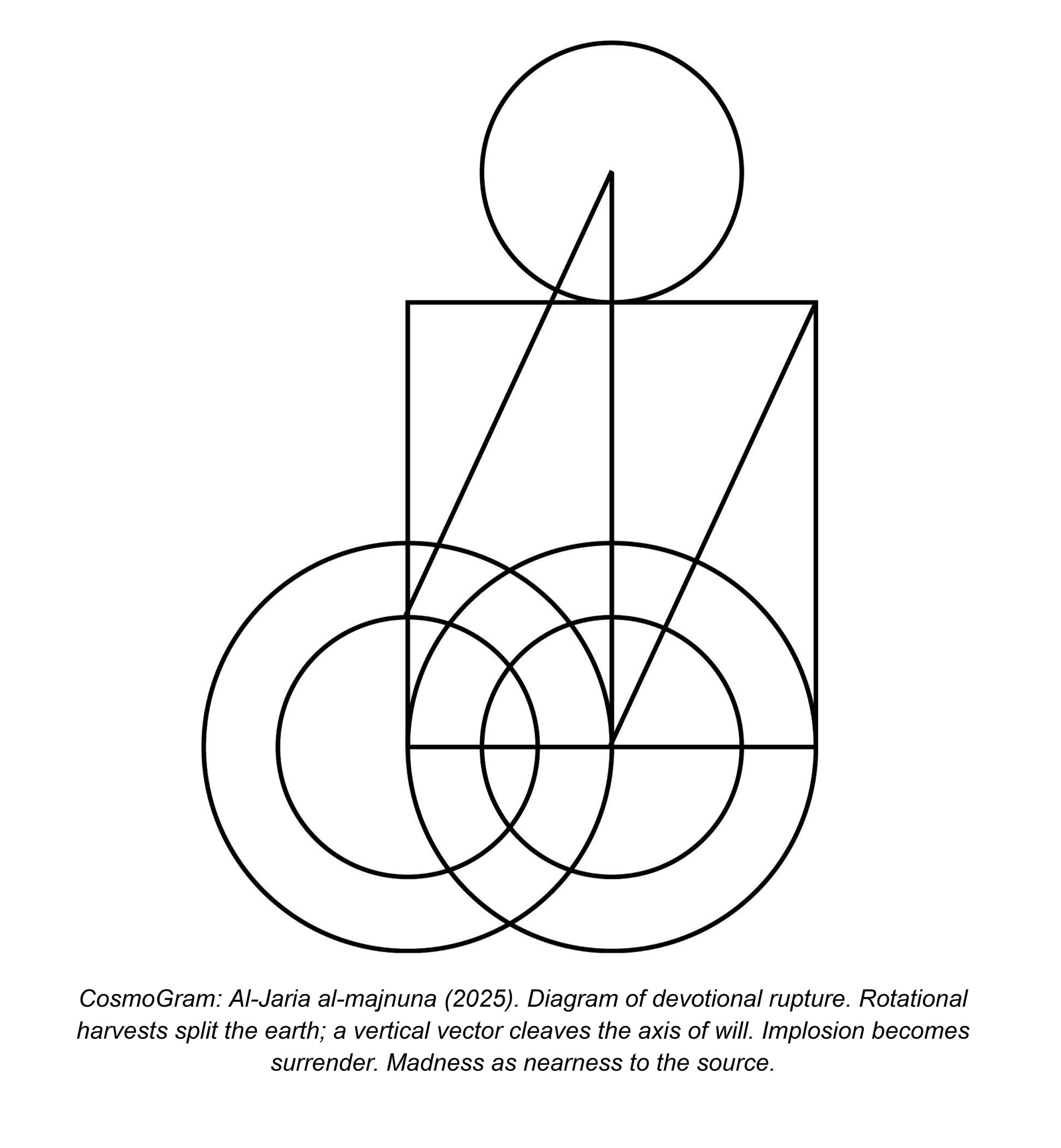
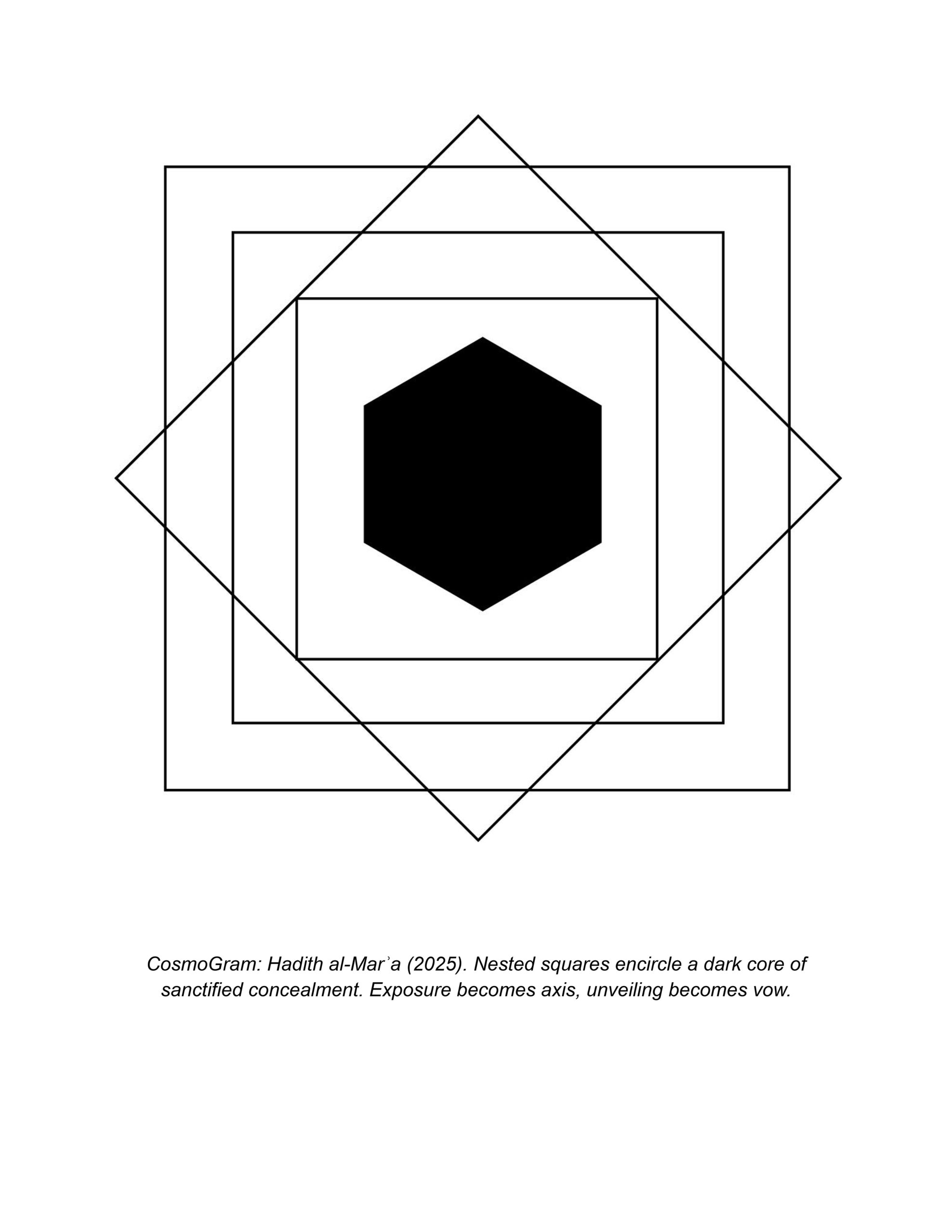
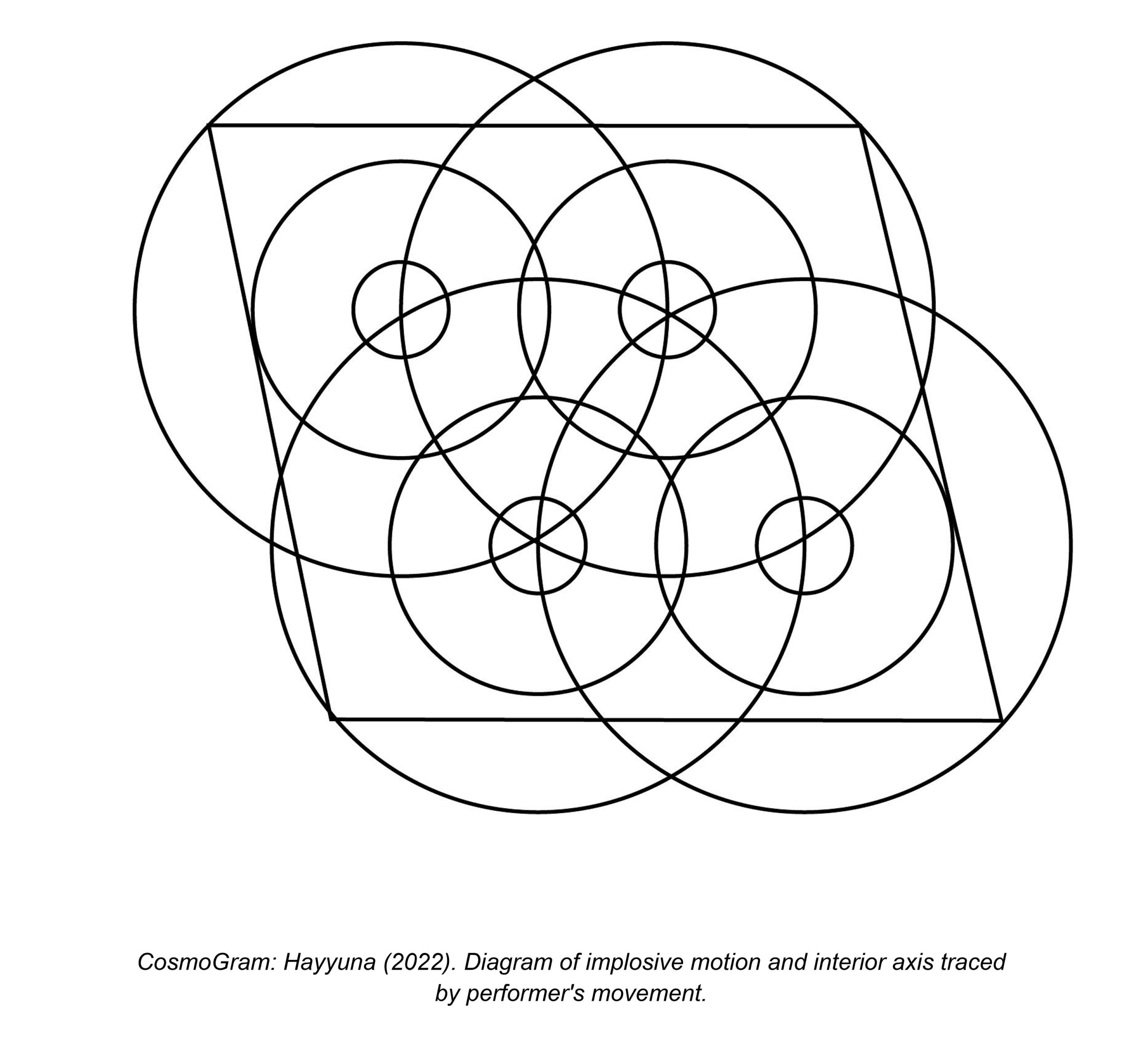
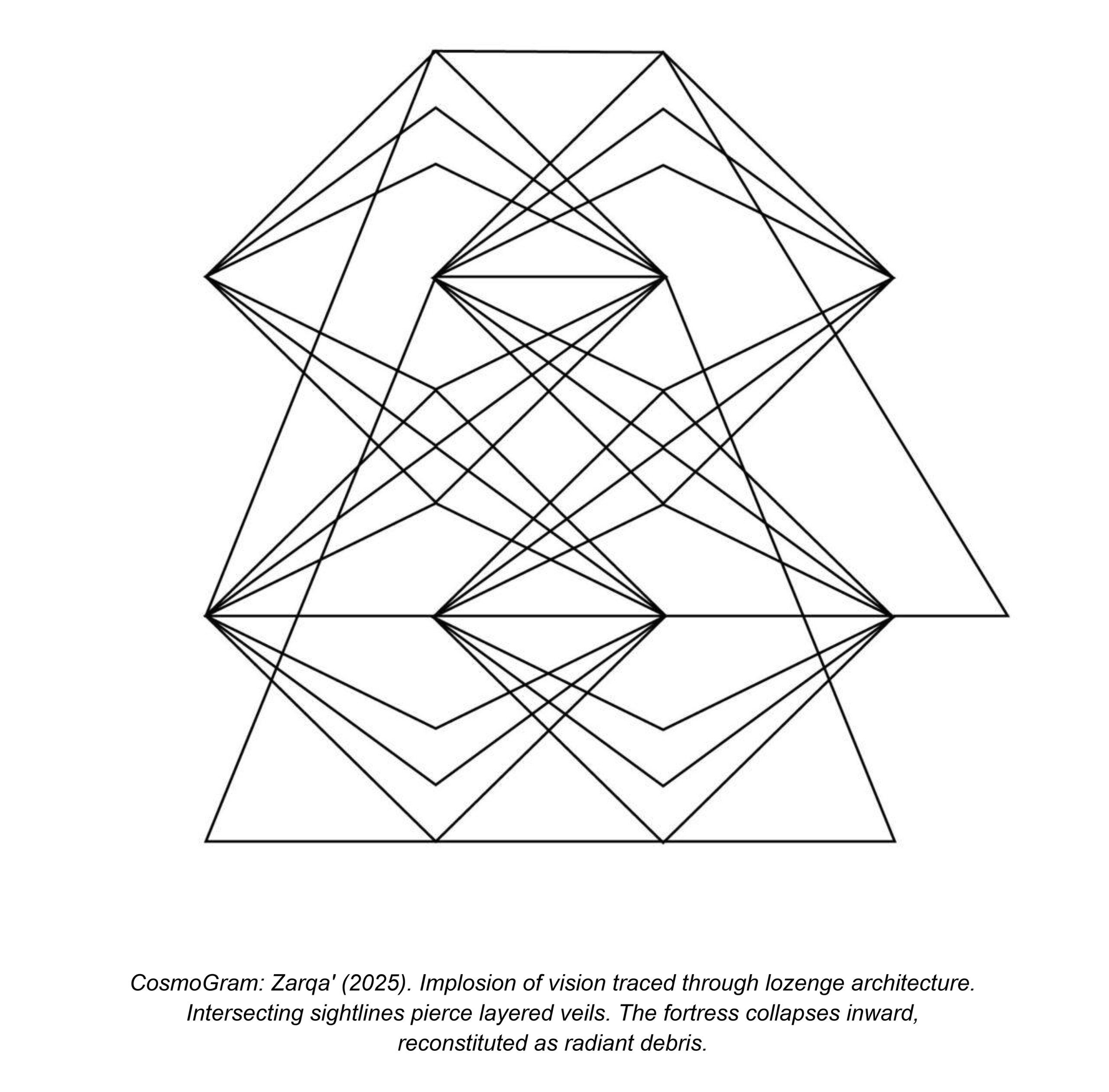
Each story of madness births its own CosmoGram: a sacred pattern abstracted from language, within which the choreography of implosion unfolds, tracing the inward passage from fragmentation to essence. The cosmograms are fields of force—energetic architectures that guide, receive, and encode movement. They are blueprints for rituals remembered, a spatial transcription of each madwoman’s divine logic. They reveal how trance organizes itself, how love collapses time, how vision implodes.
The cosmogram determines the path, and the body enacts that path through minimal, sacred repetition. In performing the cosmogram, the body becomes the terrain where memory is reinscribed. Distilled, haunting, and precise, each choreographed walk is a cut through time—a pilgrimage across metaphysical terrain.
Watch the first performance in the series: MAGNUNA 1: Hayyuna
MAGNUNA received a research grant from the Foundation for Arts Initiatives (FFAI) in 2020.
Mayar Kotb was commissioned as a historical researcher on the project, contributing to the archival inquiry and source analysis between 2021 and 2022.